MechTech Energies

Blog

Your blog category

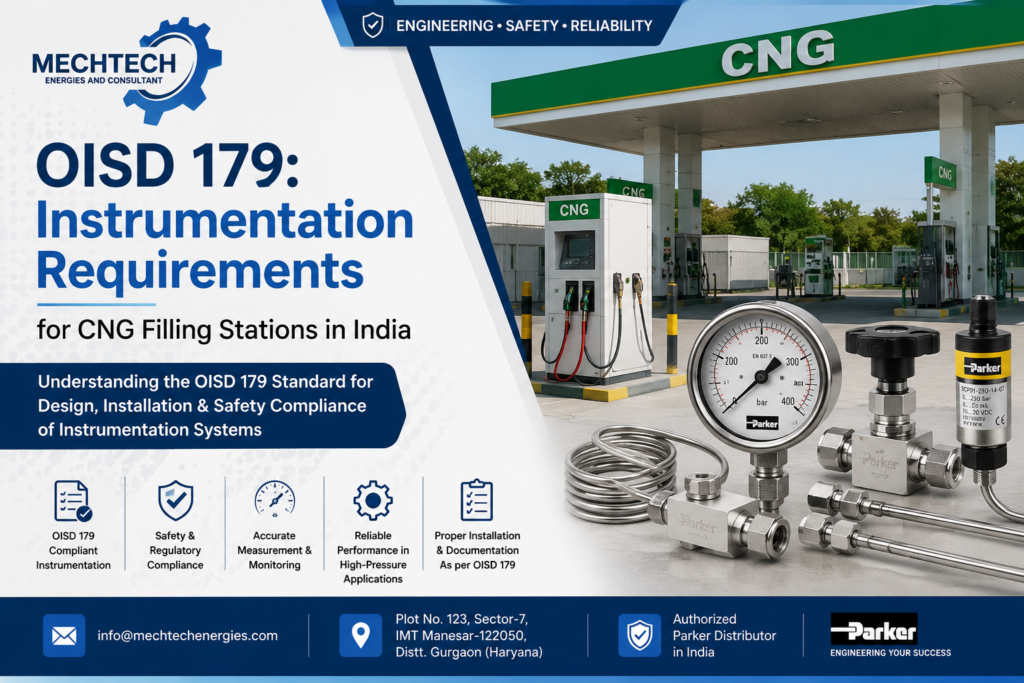
OISD 179: Instrumentation Requirements for CNG Filling Stations in India

Introduction OISD 179 is one of the key guidelines referenced in the design and operation of CNG filling stations in India. It provides safety and operational recommendations for compressed natural gas infrastructure, including instrumentation systems, piping layouts, pressure management, and station safety practices. For EPC contractors, CGD operators, and station integrators, understanding instrumentation requirements under OISD guidelines is critical for ensuring safe and compliant station operation. What is OISD 179? OISD 179 refers to the Oil Industry Safety Directorate guideline covering CNG dispensing stations and associated infrastructure. The guideline focuses on: OISD standards are widely followed across CGD infrastructure projects in India. Why Instrumentation Matters in CNG Stations Instrumentation systems help monitor and control: A failure in instrumentation integrity can impact both safety and operational continuity. Common Instrumentation Components Used in CNG Stations Instrumentation Tubing SS316L seamless tubing is widely used because of its pressure resistance and corrosion performance. Double Ferrule Fittings Used for leak-tight connections in high-pressure gas lines. Pressure Gauges Monitor compressor and cascade pressure. Pressure Transmitters Used for automated monitoring and system integration. Isolation Valves Allow safe maintenance and pressure isolation. Safety Relief Systems Protect equipment from overpressure conditions. Typical Areas Where Instrumentation is Used Instrumentation systems are installed across: Material Selection in CNG Instrumentation Most high-pressure gas systems prefer: because of: Importance of Proper Installation Even high-quality instrumentation components can fail if installation practices are poor. Key installation considerations include: Conclusion Instrumentation systems form the operational backbone of a CNG station. Following OISD-aligned engineering practices helps improve: As India’s CGD infrastructure expands, instrumentation quality and installation discipline will continue to play a critical role in station performance.

OISD 179: Instrumentation Requirements for CNG Filling Stations in India Read More »

Why CGD Operators Specify SS316L Tubing (Not SS304) for Instrumentation Lines

Introduction In CGD infrastructure and high-pressure gas systems, instrumentation tubing selection directly impacts safety, pressure integrity, corrosion resistance, and long-term reliability. This is why many CGD operators, EPC contractors, and compressor OEMs prefer SS316L instrumentation tubing over SS304 for critical gas applications. What is SS316L Tubing? SS316L is a low-carbon stainless steel alloy widely used in instrumentation systems and industrial gas infrastructure. It offers: compared to standard SS304 stainless steel. Why SS316L is Preferred in CGD Infrastructure Better Corrosion Resistance SS316L contains molybdenum, which improves corrosion resistance in demanding environments. Better Long-Term Reliability High-pressure gas systems experience continuous vibration and pressure cycling. SS316L tubing performs better under these operational conditions. Reduced Risk of Contamination Widely preferred in critical gas systems because of cleaner material characteristics. Better Compatibility with Instrumentation Fittings Parker A-LOK and similar double ferrule fittings are commonly paired with SS316L tubing in CGD applications. Common Applications of SS316L Tubing SS316L tubing is widely used in: Why SS304 is Less Preferred While SS304 is widely used in general industrial applications, many CGD operators avoid it in critical instrumentation systems because: Project specifications often recommend SS316L for critical gas service applications. Conclusion Instrumentation tubing plays a critical role in maintaining pressure integrity and long-term system reliability. For high-pressure CGD and CNG applications, SS316L tubing remains the preferred choice because of its corrosion resistance, pressure compatibility, and long operational life.

Why CGD Operators Specify SS316L Tubing (Not SS304) for Instrumentation Lines Read More »

How a CNG Cascade System Works: Components, Pressure Stages, Sizing

Introduction A CNG cascade system is one of the most important parts of a CNG station. It stores compressed natural gas at multiple pressure levels and ensures smooth vehicle filling during dispensing operations. Understanding how cascade systems work is critical for CGD operators, EPC contractors, station designers, and maintenance teams. What is a CNG Cascade System? A CNG cascade system is a group of high-pressure cylinders used to store compressed natural gas at different pressure stages. The cascade helps maintain efficient dispensing while reducing compressor loading during fueling operations. Main Components of a CNG Cascade System Storage Cylinders Store compressed natural gas at high pressure. Priority Panel Controls gas flow between pressure banks. Instrumentation Tubing & Fittings Used for pressure routing and instrumentation connections. Isolation Valves Allow pressure isolation and maintenance. Pressure Gauges & Transmitters Monitor pressure across cascade banks. Safety Relief Systems Protect the system from overpressure conditions. Pressure Stages in a Cascade System Most cascade systems are divided into: The dispensing system draws gas sequentially from different pressure banks to improve filling efficiency. Why Cascading Improves Efficiency A cascade arrangement helps: Typical Applications Cascade systems are commonly used in: Importance of Proper Instrumentation High-pressure gas systems require: Instrumentation quality directly impacts safety and operational uptime. Conclusion CNG cascade systems are essential for efficient gas storage and dispensing in CGD infrastructure. Proper cascade design, instrumentation selection, and pressure-stage management help improve station reliability, dispensing performance, and operational safety.

How a CNG Cascade System Works: Components, Pressure Stages, Sizing Read More »

PRS vs DRS in a CGD Network: What’s the Difference and What Instrumentation Each Needs

Introduction In a City Gas Distribution (CGD) network, pressure regulation plays a critical role in ensuring safe and reliable gas delivery. Two commonly used systems are: Both systems regulate gas pressure, but their applications, operating conditions, and instrumentation requirements are different. What is a PRS? A Pressure Reducing Station (PRS) reduces gas pressure from transmission-level pressure to distribution-level pressure. PRS systems are typically installed at key entry points in CGD infrastructure. What is a DRS? A District Regulating Station (DRS) further reduces gas pressure before gas reaches end consumers. DRS systems are widely used in city-level gas distribution networks. Key Difference Between PRS and DRS PRS DRS Common Instrumentation Used in PRS Systems PRS systems commonly use: Common Instrumentation Used in DRS Systems DRS systems typically require: Why Instrumentation Quality Matters Pressure regulation systems operate continuously and require reliable instrumentation integrity. Poor instrumentation practices can lead to: Conclusion PRS and DRS systems are both critical components of CGD infrastructure. Proper instrumentation selection helps ensure:

PRS vs DRS in a CGD Network: What’s the Difference and What Instrumentation Each Needs Read More »

How to Read a Parker Fitting Part Number: A-LOK Configuration Guide

Introduction Parker A-LOK instrumentation fittings are available in multiple sizes, configurations, end connections, and material grades. Understanding Parker fitting part numbers helps EPC contractors, procurement teams, and instrumentation engineers select the correct fitting for high-pressure gas systems. What is a Parker A-LOK Fitting? Parker A-LOK fittings are double ferrule compression fittings widely used in: They are designed for leak-tight performance in high-pressure applications. Typical Parker Part Number Structure A Parker fitting part number generally includes: Each code helps identify the exact fitting specification. Common Parker Fitting Configurations Male Connector Tube to male threaded connection. Female Connector Tube to female threaded connection. Union Connects two tubing lines. Elbow Used where directional change is required. Tee Used for branch connections. Common Material Grades Most CGD and CNG systems use: because of corrosion resistance and high-pressure compatibility. Why Correct Part Selection Matters Incorrect fitting selection can lead to: Engineering teams should always verify: before final procurement. Conclusion Understanding Parker A-LOK part numbers helps improve procurement accuracy and installation reliability. Correct fitting selection is essential for maintaining safety and long-term performance in high-pressure gas systems.

How to Read a Parker Fitting Part Number: A-LOK Configuration Guide Read More »

Common Failure Modes in CNG Station Instrumentation and How to Prevent Them

Introduction Instrumentation systems in CNG stations operate under continuous pressure, vibration, and operational stress. Without proper component selection and installation practices, instrumentation failures can lead to leakage, downtime, and operational disruption. Understanding common failure modes helps improve station reliability and safety. Common Failure Modes in CNG Instrumentation Systems Improper Ferrule Installation Incorrect ferrule make-up can cause leakage and pressure integrity issues. Poor Tubing Support Unsupported tubing may vibrate excessively near compressors and dispensing systems. Incorrect Material Selection Using non-compatible materials can impact corrosion resistance and operational life. Over-Tightening Fittings Excessive tightening may damage ferrules and tubing. Pressure Rating Mismatch Using components below operating pressure can create safety risks. Use of Counterfeit Components Low-quality fittings may fail under pressure cycling and vibration. How to Prevent Instrumentation Failures Use Quality Instrumentation Components Use approved SS316/SS316L tubing and high-quality double ferrule fittings. Follow Proper Installation Practices Correct tubing preparation and ferrule make-up are critical. Ensure Proper Tubing Support Proper clamping and routing help reduce vibration impact. Verify Pressure Ratings All instrumentation components should match system operating pressure. Source Through Authorised Channels Counterfeit instrumentation products create major operational and safety risks. Conclusion Most instrumentation failures in CNG stations are preventable. Correct component selection, proper installation practices, and high-quality instrumentation systems help improve operational reliability and long-term station performance.

Common Failure Modes in CNG Station Instrumentation and How to Prevent Them Read More »

CBG Plant Instrumentation: What Biogas Compressor Skids Need from Fittings and Tubing

Introduction CBG plants operate with complex gas handling systems that require reliable instrumentation infrastructure. Compressor skids, gas upgrading systems, analyzers, and pneumatic systems all depend on high-quality tubing and fittings for safe and stable operation. Why Instrumentation Matters in CBG Plants Instrumentation systems help control: Poor instrumentation practices can lead to leakage, pressure instability, and operational downtime. Common Instrumentation Components Used in CBG Plants SS316L Instrumentation Tubing Widely used because of corrosion resistance and pressure compatibility. Double Ferrule Fittings Provide leak-tight sealing in gas handling systems. Isolation Valves Allow safe maintenance and system isolation. Pressure Gauges & Transmitters Used for process monitoring and control. Typical Areas Where Instrumentation is Used Instrumentation systems are commonly installed in: Why Material Selection Matters CBG systems may contain: This is why SS316 and SS316L materials are widely preferred in biogas applications. Conclusion Reliable instrumentation systems are essential for stable and safe CBG plant operation. High-quality tubing, fittings, and instrumentation components help improve operational reliability and long-term system performance.

CBG Plant Instrumentation: What Biogas Compressor Skids Need from Fittings and Tubing Read More »

Material Test Certificate (MTC) vs Certificate of Conformance (CoC): What Each Covers

Introduction Documentation plays a critical role in industrial procurement, especially in CGD infrastructure, refinery projects, and high-pressure gas systems. Two commonly requested documents are: Understanding the difference between them is important for EPC contractors, procurement teams, and project engineers. What is an MTC? A Material Test Certificate (MTC) provides material-level verification for a product. It may include: MTCs are commonly required for pressure-rated instrumentation products. What is a CoC? A Certificate of Conformance (CoC) confirms that the supplied product meets the manufacturer’s specifications and applicable standards. A CoC typically verifies: Key Difference Between MTC and CoC MTC Focuses on material-level testing and traceability. CoC Focuses on product compliance and specification conformity. Why These Documents Matter in CGD Projects Documentation is important for: Most major infrastructure projects require proper documentation before commissioning. Conclusion MTC and CoC documents both play important roles in industrial procurement and project documentation. Understanding the difference helps ensure smoother procurement, inspection, and project approval processes.

Material Test Certificate (MTC) vs Certificate of Conformance (CoC): What Each Covers Read More »

Fake vs Genuine Parker Fittings in India: Visual Identification Guide

Introduction Counterfeit instrumentation fittings are a growing concern in high-pressure gas systems and industrial infrastructure projects. Using non-genuine fittings in CNG stations, compressor skids, and CGD infrastructure can create serious operational and safety risks. Why Counterfeit Fittings Are Dangerous Counterfeit fittings may have: These issues can lead to: How to Identify Genuine Parker Fittings Proper Branding Original Parker fittings carry proper identification markings. Traceable Packaging Genuine products are supplied through authorised packaging channels. Consistent Machining Quality Threads, ferrules, and surfaces should have uniform finish quality. Correct Part Numbering Part numbers should match official Parker catalog specifications. Documentation Availability Authorised distributors can provide proper documentation and traceability support. Why Authorised Procurement Matters For critical gas systems, procurement through authorised supply channels helps reduce the risk of counterfeit products entering the system. This is especially important in: Conclusion Instrumentation fittings play a critical role in maintaining pressure integrity and operational safety. Using genuine Parker instrumentation fittings helps improve reliability, safety, and long-term system performance in high-pressure gas applications.

Fake vs Genuine Parker Fittings in India: Visual Identification Guide Read More »

What is a Double Ferrule Fitting and Why Does it Matter in High-Pressure Gas Systems?

Introduction In high-pressure gas systems such as CNG stations, CGD networks, gas cascades, compressor skids, and industrial instrumentation lines, leak integrity is one of the most critical engineering requirements. Even a minor leakage issue can lead to pressure loss, operational downtime, safety concerns, and long-term maintenance problems. This is where double ferrule fittings play a critical role. Double ferrule compression fittings are widely used across high-pressure instrumentation systems because they provide reliable tube grip, vibration resistance, and leak-tight sealing under demanding operating conditions. What is a Double Ferrule Fitting? A double ferrule fitting is a mechanical tube fitting used to connect instrumentation tubing in high-pressure systems. It consists of: When tightened, the front ferrule creates the primary seal while the back ferrule grips the tubing securely. This dual-action mechanism provides superior sealing and vibration resistance compared to single ferrule systems. Why Double Ferrule Fittings Matter in CNG and CGD Systems High-pressure gas systems experience: Double ferrule fittings are designed to handle these conditions while maintaining long-term sealing performance. In CGD and CNG infrastructure, these fittings are commonly used in: Key Advantages of Double Ferrule Fittings Leak-Tight Performance The dual ferrule mechanism helps create a strong gas-tight seal suitable for high-pressure applications. Better Tube Grip The back ferrule grips the tubing securely, reducing tube slippage under pressure. Vibration Resistance Ideal for compressor and gas handling systems where vibration is common. Reusability Properly installed fittings can often be disconnected and reassembled without losing performance. Long-Term Reliability Widely preferred in critical industrial gas systems because of consistent performance over long operational periods. Why Parker A-LOK Fittings Are Widely Used Parker A-LOK double ferrule fittings are widely specified in CNG and industrial gas systems because of: These fittings are commonly used by EPC contractors, CGD operators, compressor OEMs, and skid manufacturers. Common Applications in India Double ferrule fittings are commonly used in: Conclusion In high-pressure gas systems, the quality of instrumentation fittings directly impacts safety, reliability, and operational continuity. Double ferrule fittings remain the preferred choice for modern CGD and industrial gas infrastructure because they provide leak-tight performance, vibration resistance, and long-term reliability in demanding operating environments.

What is a Double Ferrule Fitting and Why Does it Matter in High-Pressure Gas Systems? Read More »

STILL NOT SURE WHAT TO DO?

We are glad that you preferred to contact us. Please fill our short form and one of our friendly team members will contact you back.

    X
    Enquire Now